Choosing the right wattage bulb for your bedside lamp can make a significant difference in your everyday comfort. When it comes to illumination, an expert like John Bright, a lighting specialist, asserts, "The right wattage ensures your space feels cozy without straining your eyes."
Understanding "what wattage bulb should I use for a bedside lamp" is crucial for creating the perfect restful environment. The brightness of your lamp affects your mood. Too bright can be jarring, while too dim might not provide enough light for reading. Generally, a bulb between 40 to 60 watts is ideal.
However, consider your personal habits and preferences. You might prefer a softer glow or a brighter setting for reading. Reflect on your needs and adjust accordingly, knowing that each choice can impact how you feel in your space. Keep experimenting until you find that sweet spot.
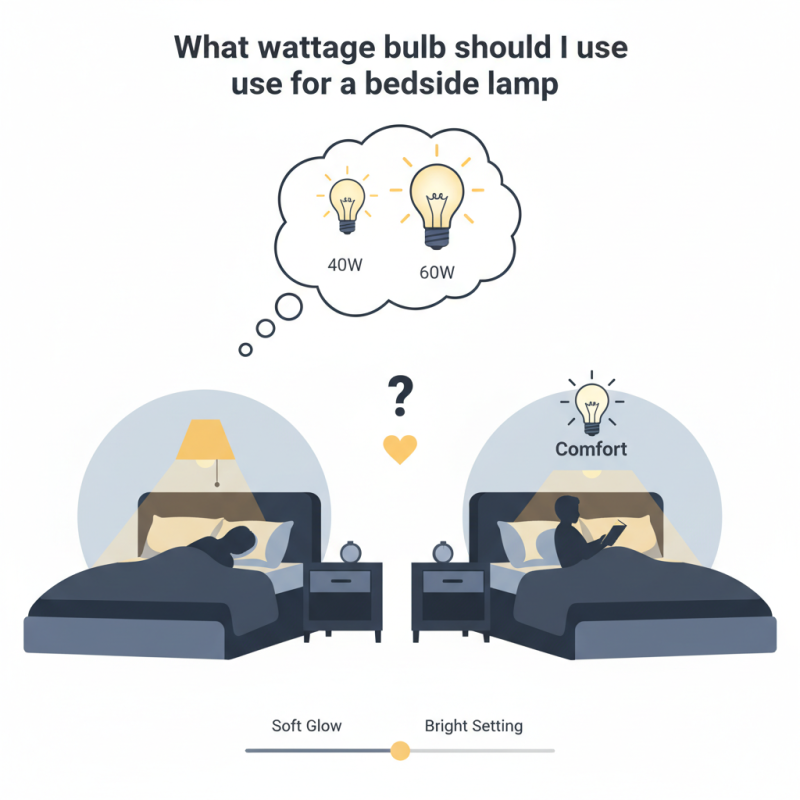
Choosing the right wattage for your bedside lamp is crucial for both functionality and comfort.
Wattage determines how much energy a bulb consumes, and ultimately affects brightness. Too bright can be harsh, while too dim can strain your eyes.
Ideal bedside lighting should create a warm, inviting atmosphere while still being
practical for reading or winding down.
Consider the activities you typically do at your bedside. If you enjoy reading, a higher wattage of
60 to 100 watts might be beneficial. However, if your primary use is a soft nightlight, lower wattage
around 40 watts could suffice. It’s important to test different wattages to see what feels right for your space.
Sometimes, a bulb can seem too bright in one room but just perfect in another.
Reflecting on past choices can also guide you. Have you ever felt a bulb was too harsh? Or perhaps you’ve struggled with insufficient light?
These experiences highlight the importance of wattage.
By understanding your needs and preferences, you can create a bedside sanctuary tailored to you.
When selecting the right wattage bulb for your bedside lamp, understanding your lighting needs is crucial. A general guideline suggests that 40-60 watts is ideal for reading and relaxing. The type of bulb you choose also matters. According to the U.S. Department of Energy, LED bulbs use up to 75% less energy than incandescent bulbs. This factor can significantly influence your choice.
Consider how you use the lamp. Do you read in bed? If so, brightness is essential. For reading, aim for bulbs around 800 lumens. If the lamp serves as ambient light, a softer glow at around 400 lumens works well. However, too much brightness can be harsh at night. Reflect on your routines; dimmer options may promote better sleep.
Tips: Always think about color temperature. Bulbs can emit warm or cool light, affecting your mood. A warm white light (2700K-3000K) is calming, while cool white (3500K-4100K) can feel invigorating. Also, don’t overlook dimmable options. They provide flexibility to adjust the brightness based on your needs.
Choosing the right wattage for your bedside lamp can significantly impact your comfort and mood. Different bulb types offer varying wattage ratings, which affect brightness and energy use. For instance, incandescent bulbs typically consume more power but provide warm light. In contrast, LED bulbs use less wattage and last longer, making them an energy-efficient choice.
When comparing bulb types, consider how they interact with your space. CFLs, or compact fluorescent lamps, are brighter than incandescent but may take time to reach full brightness. If you need instant light, LEDs are better. However, they can sometimes feel cold. Think about what matters more: warmth or efficiency?
Ultimately, you may find that your choice doesn’t align perfectly with your expectations. Many people overlook their personal preferences for brightness and color. Finding the right balance is tricky. Experimenting with different bulbs can lead to unexpected discoveries about your lighting needs.
| Bulb Type | Equivalent Wattage | Lumens | Lifespan (Hours) | Color Temperature (Kelvin) |
|---|---|---|---|---|
| Incandescent | 60W | 800 | 1000 | 2700K |
| LED | 8-12W | 800 | 15000-25000 | 2700K - 5000K |
| CFL | 13-15W | 800 | 10000 | 2700K - 6500K |
| Halogen | 40W | 500 | 2000 | 3000K |
Choosing the right wattage for your bedside lamp can be tricky. Room size and purpose play a crucial role in this decision. A small bedroom may only need a 40-watt bulb, while larger spaces can accommodate 60 to 100 watts. Consider how you use the space. Do you read at night? Then a brighter bulb makes sense.
For a cozy ambiance, lower wattage works well. A 25-watt bulb can create warmth without being harsh. Think about where the lamp is placed. If it's near your bed, excessive brightness can be uncomfortable. It's about finding balance.
Reflect on your needs. You might realize that your lamp is too dim or too bright. Experiment with different wattages to find what suits you. The right bulb can transform your space. It enhances both functionality and comfort, making your room feel just right.
When selecting energy-efficient bulbs for your bedroom, consider the lumens-to-watts ratio. LED bulbs typically provide about 80% more light per watt than traditional incandescent bulbs. This efficiency means you can achieve the same brightness with lower energy consumption. A standard LED bulb can produce approximately 800 lumens while only using 10-12 watts, compared to a 60-watt incandescent bulb.
Additionally, color temperature plays a crucial role in creating a cozy bedroom environment. Look for bulbs labeled "warm white," which usually range from 2700K to 3000K. This spectrum mimics the warmth of candlelight, promoting relaxation and better sleep. According to a study by the International Energy Agency, widespread use of LEDs could save approximately 1,800 terawatt-hours globally by 2030.
However, it's essential to consider your specific lighting needs. If you find that bright lighting disrupts your sleep schedule, opting for dimmable LED bulbs may be beneficial. While they may cost more upfront, their longevity—lasting up to 25,000 hours—can make them a wise choice. Many consumers overlook the long-term savings that energy-efficient options provide. Balancing initial investment with actual energy bills is where the reflection begins.
: Aim for 40-60 watts for reading and relaxing.
LED bulbs use 75% less energy and emit more light per watt.
For reading, choose bulbs around 800 lumens for adequate brightness.
A softer glow of around 400 lumens works well for ambient light.
Warm white light (2700K-3000K) promotes relaxation and better sleep.
Yes, dimmable options adjust brightness, which can enhance your comfort.
Energy-efficient bulbs can last up to 25,000 hours, offering longevity.
It helps to achieve desired brightness while reducing energy consumption.
Yes, bright lights can disrupt sleep; dimmable options are advisable.
Consider your routines; the right choice affects your comfort and sleep quality.
Choosing the right wattage for your bedside lamp involves understanding the importance of wattage in lighting and meeting your specific lighting needs. When considering "what wattage bulb should I use for a bedside lamp," it’s crucial to compare different bulb types and their wattage ratings, as they can significantly affect the ambiance and functionality of your bedroom.
To determine the ideal wattage, consider the room size and the lamp’s purpose—whether you need bright light for reading or softer lighting for relaxation. Additionally, selecting energy-efficient bulbs can help reduce electricity costs while enhancing your space. By following these guidelines, you can ensure that your bedside lamp provides the perfect lighting for your needs.

Q-Link Lighting